Creative Caretakers
Most days, I have a general sense that I don’t live conquer creative work alone. I nurture my writing between the constraints of freelance work, parenting obligations, and whichever circuitous route Waze takes me down toward my kids’ activities. I’m disciplined in making the most of the quiet pockets of time in my schedule. But even as I work independently, I’m not working alone. And this recognition never rings more true to me than during a vacation week.
When my children are home from school, I’m humbled by how little time I have to myself. Don’t get me wrong; I love the extra hours with them. Even when I’m worried if they’re squabbling. Even when I’m (more!) worried if they’re suddenly quiet. As soon as my normal routine clicks back into place, I miss them. But still. There are moments when, despite the chaos, I tiptoe away to follow a creative impulse.
In these moments, I appreciate the creative caretakers who often go unsung; not our collaborative partners but the ones who help us protect our time.
My husband is not my writing buddy, but he is the person who nudges me to prioritize my writing life. Chores can wait. Ditto for the kids’ snacks. I can walk the dog in fifteen minutes, instead of right now. I can cancel plans to dive headfirst into my manuscript instead. I do recognize my own agency, but I find it validating to be reminded I can say “no.” Because a “no” to one obligation is an enthusiastic “yes” to something else.
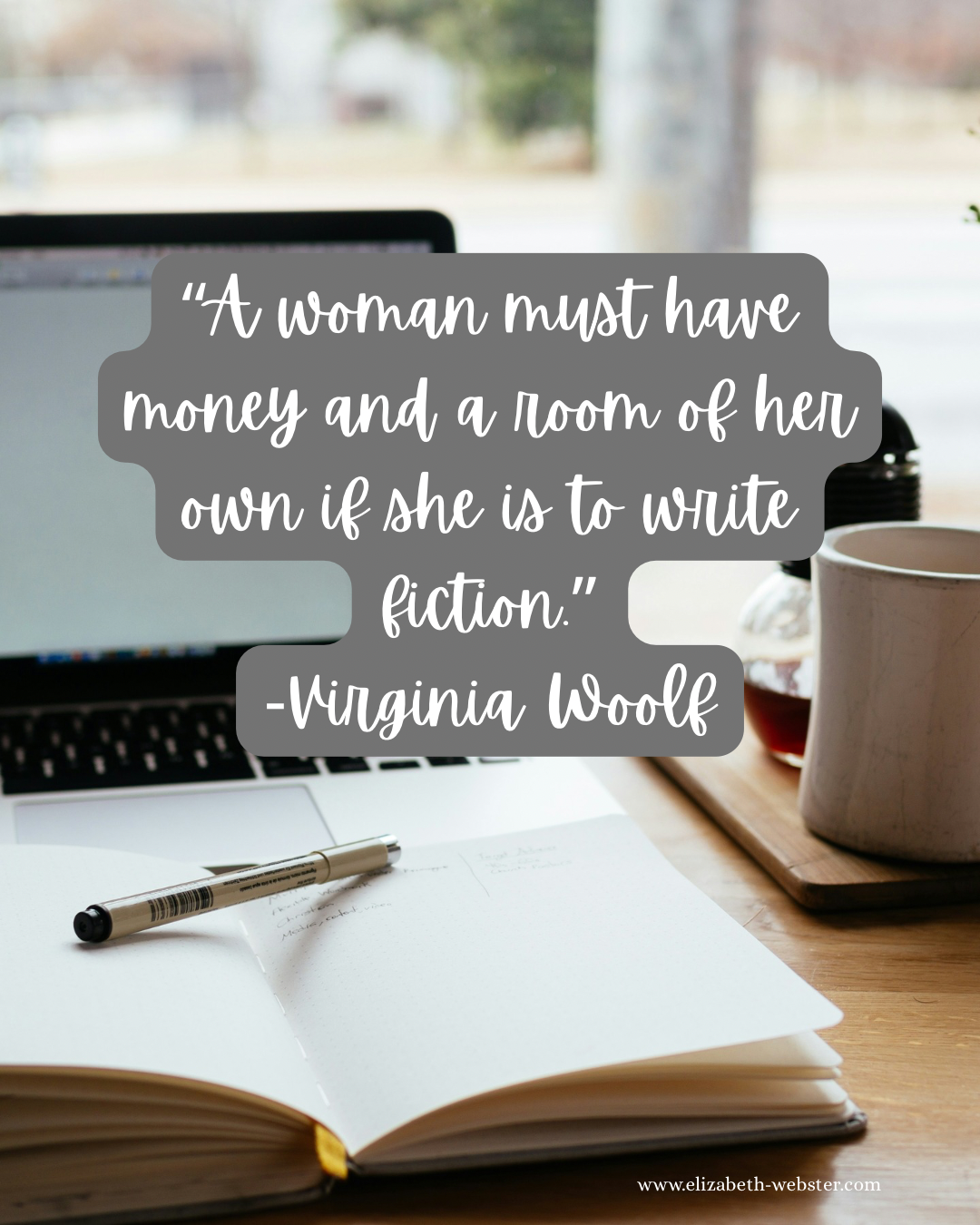
Virginia Woolf’s famous quote reminds us that creative work requires the environment to sustain it. However, Woolf forgets another key aspect of making things: the people who support the effort.
Though Virginia had a complex relationship with her husband, Leonard, he protected her writing in her lifetime and after her death as well. During their marriage, Leonard served as Virginia’s first reader and editor. In her journals, she recorded the kind words he offered after reading her work. To the Lighthouse was, in Leonard’s eyes, a “masterpiece;” as was The Waves. Leonard also notably helped Virginia when she struggled with mental illness. Following her death, Leonard published her journal entries on writing in the anthology, A Writer’s Diary, and worked to protect her legacy.
Virginia always valued Leonard’s contribution. In her final letter to him, she wrote: “What I want to say is I owe all the happiness of my life to you. You have been entirely patient with me and incredibly good.” And Virginia isn’t alone in her appreciation for this specific form of love.
Vincent van Gogh used similar language in thanking his brother, Theo. In a letter, van Gogh wrote, “My dear, Theo, you are always with me in spirit, though we may be far apart.” Vincent and Theo enjoyed symbiotic relationship throughout their lives. Theo loved his brother unconditionally and urged him to become a painter. Even though Vincent’s work wouldn’t truly sell until after his death, Theo used his art dealer expertise and his brotherly faith to protect Vincent’s creativity. Theo supported Vincent psychologically, financially, and even named his son for his big brother. Vincent may have been the one to paint his genius works, but Theo’s lifelong devotion lives in those brushstrokes, too.
Like van Gogh, Jane Austen depended on her sister’s support to write her iconic novels. Cassandra and Jane lived together their entire lives as neither sister married. Because Cassandra handled the household management, Jane was able to dedicate more hours each day to writing. In her short life, Jane completed six novels. Her productivity was doubtless due to her big sister’s efforts to support Jane’s craft, but also to the writing practice Cassandra inadvertently gave her. Because Jane also wrote thousands of letters in her lifetime, many of them to Cassandra. Jane’s letter writing gave her another opportunity to play with words and to refine her voice.
Cassandra ultimately destroyed most of her correspondence with Jane following her Jane’s untimely death. Many scholars today balk at the loss, but none of us can know the depth of their sisterly bond. We also likely wouldn’t have Jane’s six novels today without Cassandra’s steadfast support. In the end, Cassandra protected Jane’s legacy and their privacy, too.
From all of these stories, I’m reminded to be grateful for the people (especially my one person) who help me live mine authentically. I’d love to hear who most supports your creative endeavors. And if you’re inclined, today presents a fresh opportunity to thank them. If you’re hoping to create something new, remember to ask for help! The people who love you most will champion you, and even history’s greatest talents didn’t go it alone.