Five Reasons Why Your Brain Loves Beach Reads
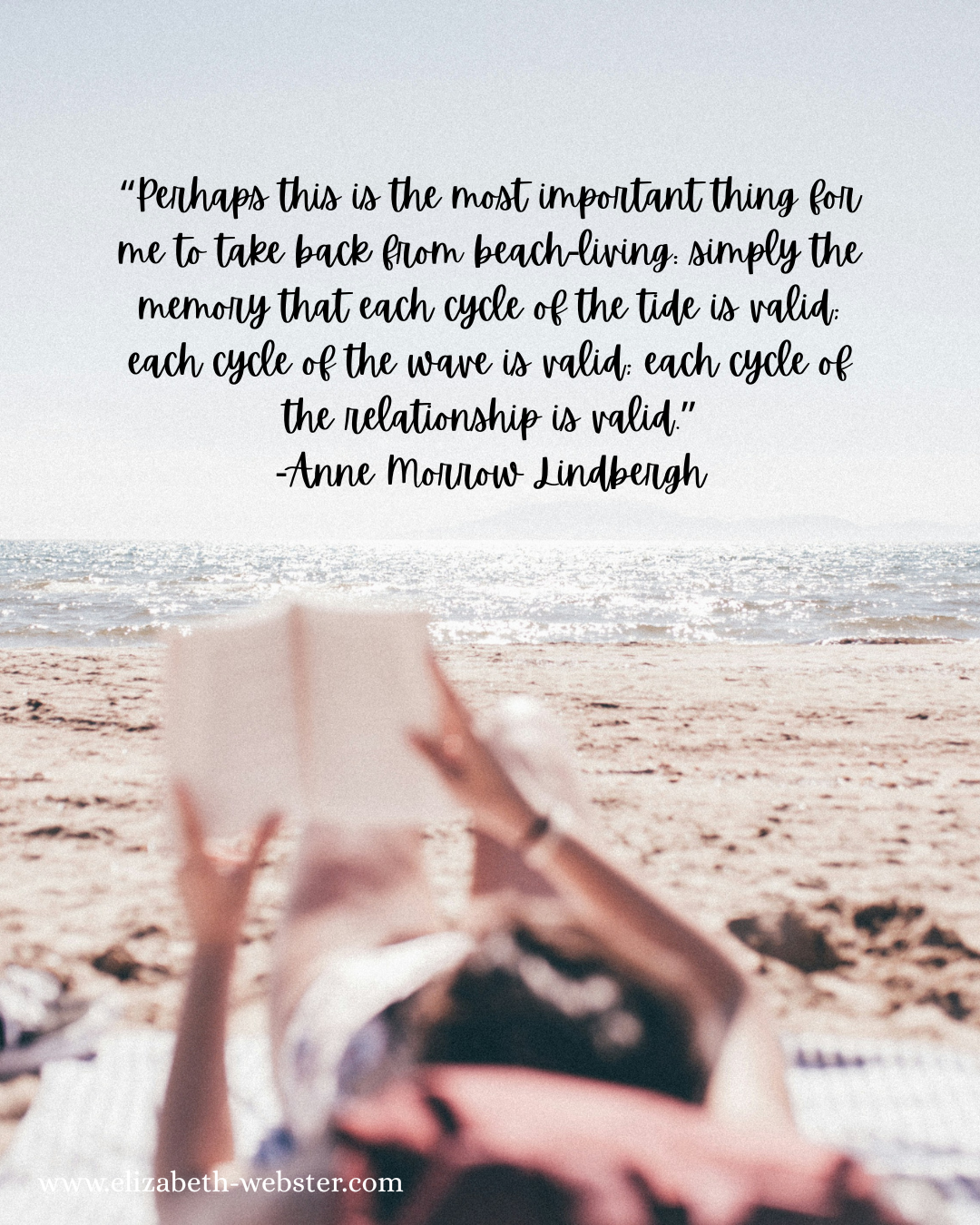
Image by Angelo Pantazis via Unsplash.
Recently, author Kristy Woodson Harvey posted a compelling set of slides to her Instagram feed in which she made a polite request. She asked readers to stop using “anti-beach read” language. Woodson Harvey also offered helpful alternatives. For example, instead of describing a book derisively as “just a beach read,” you could try, “a novel that will emotionally dismantle me … but near water.” Unpacking people’s reasons for belittling beach reads is above my pay grade. Instead, I’ll offer five reasons that beach reads are actually good for your brain.
Reading a book, no matter its genre, supports your long-term health.
Sadly, the amount of time that people allocate to reading for pleasure has fallen off a cliff. As I mentioned in a previous post, a study conducted by the University of Florida and the University College of London discovered that daily reading for pleasure has plummeted by more than 40% over the past 20 years.
I’ve sensed that time spent reading is declining among those in my circle, but this? This is dark.
Researcher Jill Sonke noted that people suffer a loss to their overall wellbeing when they stop reading for fun. Sonke said, “Reading has historically been a low-barrier, high-impact way to engage creativity and improve quality of life. When we lose one of the simplest tools in our public health toolkit, it’s a serious loss.”
When adults read books, with the same level of daily commitment they extend to working out or eating well, they’re taking powerful action to support their health. They’re also modeling behavior for the next generation.
So that beach read you’re reading isn’t “just” a book; it’s a radical act of slow-living rebellion amidst a culture that exalts instantaneous gratification. Books offer escape, pleasure, and deep meaning. Alongside their promise of entertainment, they support our desired health outcomes in a holistic way that doomscrolling can’t touch.
But they require some extra effort from us as well.
When we take that time to read, we take part in a centuries-old method to prioritize ourselves. Before people knew the word “self-care,” they knew that a book somehow soothed their monkey minds. Reading a beach read - or any book at all - binds us to a long tradition of relying on the written word as a salve to the hardest aspects of the human experience.
Beach reads promote outside reading like no other genre.
What benefits you as much as reading a book? Getting outside.
A beach read will inspire you to do just.
Because at base, a beach read is a love letter to a landscape. My novel, Summer Triangle, immerses you in the beauty and wonder of the Delmarva Peninsula. I grew up spending bits and pieces of my childhood at my grandparents’ beach house on the bay there. As much as I hoped to capture the interior lives and the entwined plot of three spirited main characters, I also wanted readers to feel rooted in the setting.
Any book can offer a transportive experience. But with a beach read, we know exactly where we’re going. Beach reads offer a destination that is as much an escape from “real life” as an opportunity to reflect on lives that have often become too saturated and exhausting for deeper questions. And while beach reads perhaps aren’t as healing as an actual trip to the actual ocean, they come close. Because brains don’t fully grasp the difference between truth and, well, fiction.
In a very real way, the healing benefits of the ocean can reach you through your beach read.
Beach reads can also inspire us to “touch grass” or, in this case, sand. While beach reads typically offer lush landscape descriptions, those descriptions are coupled with the experience of characters finding meaning within that landscape. Beach reads don’t only describe a waterfront view. They show readers how they’ll feel when they get there. If a beach read can’t inspire your next vacation, no book can.
And if ever a book could convince you to get outside and get some sunlight on your face as your turn those pages, it’s a beach read.
With their emphasis on the emotional journey of characters, beach reads expand our empathy.
Studies have shown that reading fiction increases our capacity for empathy. When a story draws us into a character’s internal world, we feel deeply connected to that character’s emotions.
Humans have always been storytellers and social creatures. In a primal, timeless exchange, we’ve connected through the stories we tell. As we read about fictional characters, our brains architect “mental models” and light up the neural pathways that govern our capacity to consider different perspectives.
Over time, we notice more details. Fiction cues us to take note of subtle body language, of reflexive responses, of patterns. Fiction reminds us that words don’t always match the underlying emotion.
Best of all, fiction allows us to venture into deep emotion at a low cost. We’re completely safe as we take journeys with the characters. As much as we feel everything with them, we also feel secure in our sense of distance. We’re experiencing everything with the characters, but we remain ourselves.
Beach reads are often marketed as escapist. While I understand this inclination (and agree with it on many levels!), I’ve never read a beach read that wasn’t anchored to a satisfying, deeply human emotional journey. As Woodson Harvey wrote, beach reads “emotional dismantle” you.
But, mercifully, they always put you back together.
I’m admittedly biased, but I believe beach reads have enhanced my own empathy. The access they’ve provided to characters’ raw emotions and internal states has made me more observant. Beach reads are painted as light, yet they’re too obsessed with the human condition to be so easily dismissed. I wanted to write in this genre not only because beach reads offered characters an escape but because of how fully developed those characters were realized. I viewed them as gift long before I wrote my own.
Against the backdrop of a loneliness epidemic, beach reads provide a framework for connection.
In 2023, the U.S. Surgeon General Vivek H. Murthy declared loneliness a national public health epidemic. According to the data, approximately half of American adults report feeling lonely.
As U.S. Surgeon General Murthy noted, “Loneliness is far more than just a bad feeling - it harms both individual and societal health. It is associated with a greater risk of cardiovascular disease, dementia, stroke, depression, anxiety, and premature health.”
In other words, prolonged loneliness negatively impacts our mental health, with profound consequences for our physical health as well.
But can a book make someone feel less lonely?
In a word, yes. Studies have repeatedly shown that reading improves a sense of connection for readers, even when readers are reading alone.
And because beach reads are unapologetically relational, as much concerned with the ties the bond characters as they are those waterfront views, they offer a powerful primer for building relationships. Beach reads often open with a main character falling apart. In many of the beach reads I’ve read, characters confront a deep sense of loneliness and detachment from their current reality - and it’s this feeling of displacement that ultimately drives them to escape. When they reach the beach, they find healing in its peaceful landscape over time. But they inevitably find connection there, too.
As the story unfolds to draw in more people, the reader experiences the sensation of watching relationships bloom. The character often confronts vulnerability and slowly begins to let people in. Beach reads also offer the “third places,” such as a coffee shop, a marina, or (of course!) the beach itself, where characters can meet others and embark on a new story.
In Summer Triangle, an escape to the beach offers an opportunity for three (extremely isolated) women to open up to the possibility of friendship again. As they learn to trust and rely on each other, their lives change for the better. Romance, empowerment, and new opportunities find them, but their support system came first. Their friendship provided the foundation required to make those changes.
When we watch a friendship develop in a book, we’re reminded that we can take small steps to connect with people in real life, too. We’re also reminded that lasting change takes time. After all, characters will require many chapters to change their lives. And so will we.
Most beach reads provide an HEA that’s satisfying enough to soothe your nervous system.
Often, books with “happily ever after” endings are dismissed in high-minded literary circles. They’re thought to be too saccharine. Too predictable. And because real life doesn’t often tie up loose threads into a neat bow, they’re considered less “real.”
I love romance author Emily Henry’s response to that criticism. Henry told The New York Times, “I have a real issue with the fact that a tragic love story is treated as more important or more valuable than a love story that ends in a place of hope and optimism … You can end the story in the sad, tragic moment, or you can end it in the beautiful, happy moment. And that doesn’t mean the sad, tragic moment didn’t happen. It just means this is the moment that matters.”
Where an author decides to end the story is key. And beach reads, like romance novels, often end on a hopeful, high note. Another chapter is always about to begin.
While this choice has artistic consequences, a book’s ending can also have measurable benefits for the reader’s nervous system and your brain. Like books, our bodies frame narratives, too.
Because our brains have trouble distinguishing between what is true and what is pretend, an upsetting book can dysregulate our nervous systems. On the other hand, a book that ends happily causes our brains to release dopamine. That “dopamine high” offers pleasure in the moment, while reinforcing a lasting sense that positive outcomes are possible.
In sum, reading for pleasure is good for you. Reading books that cultivate an emotional response, center relationships, and finish with a happy ending go one better: they stimulate the pleasure responses in our brains. Moreover, they offer certainty in an uncertain world. Howard Rheingold noted, “Attention is a limited resource, so pay attention to where you pay attention.” It’s worth prioritizing stories that reward that attention.
The best book for you is the one you want to read. But if you give it a chance, I think you’ll find a beach read will satisfy all of your literary cravings. And in the end, it might nourish your brain, too.