Christina Vitabile, a photographer and the author of Images of America: Around St. Michaels, for has graciously allowed me to spotlight the compelling images she showcases on her @delmarvajournal Instagram account. Vitabile’s feed not only provides imagery of historic spots along the Delmarva Peninsula but also presents an access point into its layered history. In the following interview, Vitabile offers her thoughts about sharing Delmarva’s nuanced history with a modern, digital audience.
Christina Vitabile’s inspiring Instagram account, @delmarvajournal, is one of my favorite excuses to lose track of time. Vitabile’s feed is dedicated to featuring historic Delmarva sites with informative, poignant captions that capture the diverse (often hidden) stories of this area. I’ve logged countless hours exploring Delmarva, absently wondering about the historic homes, churches, and storefronts as I passed them. Vitabile’s “Delmarva Journal” offers a substitute for that wise, informed friend I wish I’d had whispering in my ear.
Social media is often derided as an addictive pastime that chips away at our focus and mental health, but Vitabile’s educational account serves as a positive example a platform’s power. Perhaps digital spaces that remind us of our history matter now more than ever. Through an email interview, Vitabile kindly answered a few questions about the inspiration behind her thought-provoking account.
Elizabeth Webster: Tell us about yourself! What inspired you to take these pictures?
Christina Vitabile: Hi Elizabeth! It’s very nice to meet you, and thank you for your kind words about my Instagram feed. I am Pennsylvania-born, and Maryland-bred. I’m fortunate to have been exposed to the history of both places. My parents owned an historic late 1800s Italianate-style farmhouse in Limerick, PA. They often talked about the craftsmanship of the house, and also about the placement of the property - it was built on farmland near an older farmhouse dating from the 1700s, which still stands today in ruins - and its relation to the economic history of the area. My parents were my first teachers about landscape and how humans inhabit and create dwellings that reflect their lives. That house was torn down some years after they sold it in the early 1960s to make way for a bowling alley - this was my first introduction to the surrender of history and craftsmanship in favor urban development.
EW: Have you always had an interest in local history?
CV: Always - I’ve always lived in historic areas and wondered about the lives of those who lived there, how they lived, where they lived, and their connection to local, national, and global events.
EW: What do these historic homes and buildings mean to you? Why is it important to share these images with a modern, digital audience?
CV: I think we’ve all noticed how our landscapes are changing - it used to be from population growth, but that is now attributable to climate change as well. In my lifetime, I’ve particularly noticed registered historic buildings disappearing, which is heartbreaking, but also the quiet little villages and communities that are subsumed into modern subdivisions that sprawl endlessly around urban areas. Middletown, Delaware is an extreme example of this; what used to be one of the most unique and beautiful 3 miles of historic farms and old mansions is now just shopping centers and high-density housing. All that history lost for a Walmart … just tragic. It made me sense the urgency of documenting these places.
EW: What do you hope people take away from your work?
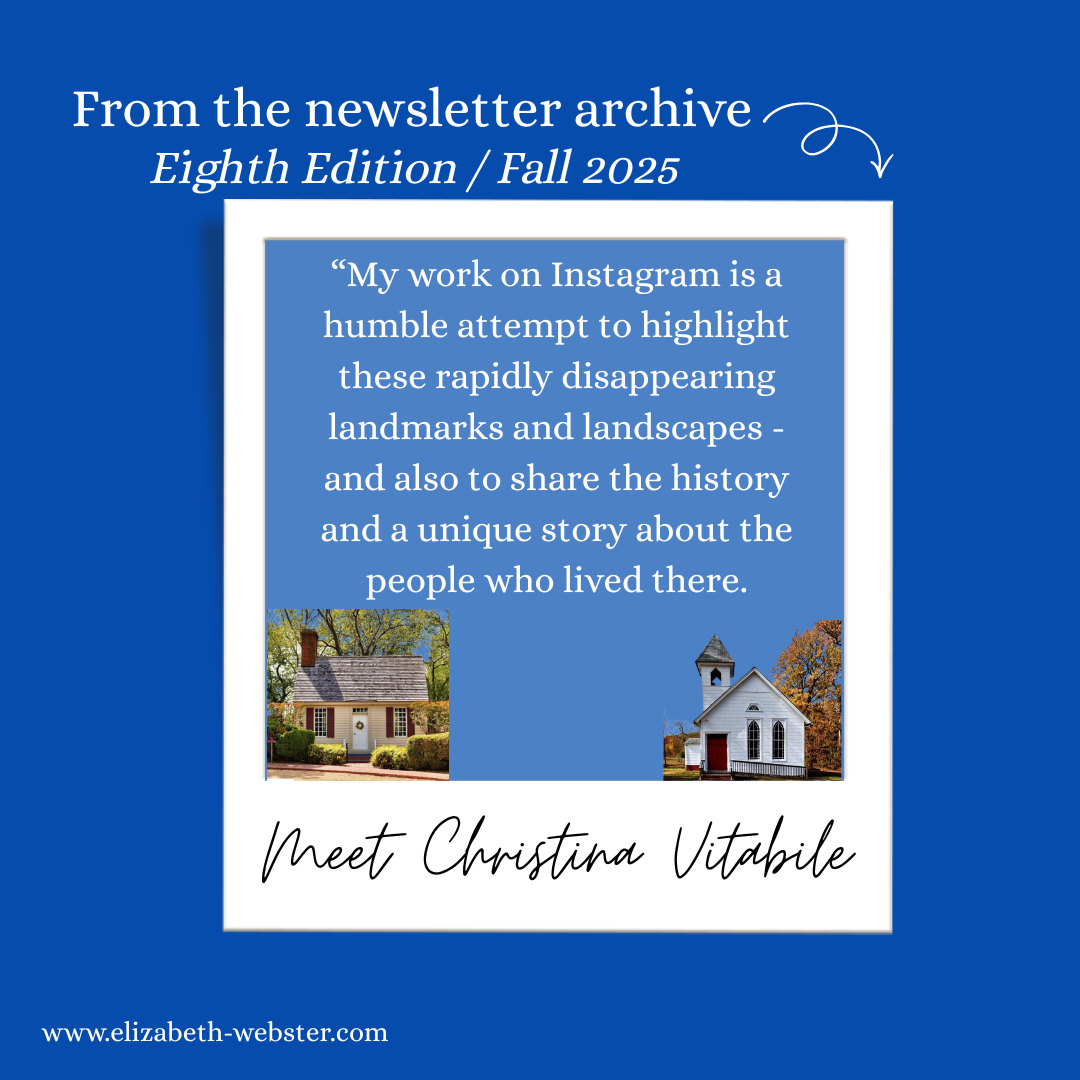
CV: We need to do better in preserving our visible history - whether by volunteering, becoming an advocate for preservation, or donating to organizations that support preservation. My work on Instagram is a humble attempt to highlight these rapidly disappearing landmarks and landscapes - and also to share the history and a unique story about the people who lived there. [One] of the best ways to get people interested in history is to share is to share the stories - they may be sad, infuriating, uplifting, or really amazing. In whatever imperfect way that I present these places, I hope the viewer/reader enjoys the experience and is moved to respond.
EW: What do you love most about the Delmarva Peninsula?
CV: It’s a deceptively quiet-looking place with stunning landscapes and an enormous amount of history and raucous behavior. Every house tells a story. It’s been an enormous amount of fun finding these little histories - and, of course, it’s always home to me.
EW: How does looking at the world through a photographer’s lens shape the way you see it?
CV: That separation between you, the camera, and the subject gives you the distance to see and consider how others might perceive your image. Much of my work is done quickly and without a professional photographer’s toolkit - I want the viewer to see what I saw in that moment, in natural light, and with little manipulation (although for fun I try out filters - and am usually disappointed). Sometimes I shoot at the end of the day, and I need to bring out what’s in the shadows, but that’s as complicated as it gets. I use several cameras that each have their limitations (LUMIX S5, a bridge LUMIX, an old Nikon, a pocket Olympus, and an iPhone - I’m not picky; I use whatever’s handy). I’m a fan of imperfections - and that’s pretty obvious in my work. Sometimes I see technically stunning photos of Delmarva - and I really enjoy them - they’re beautiful, but they seem very corporate and a bit soulless - by that I mean they do not confront the viewer with their humanity; they are slick in the commercial sense. [They’re] perfectly colored, composed, and would look equally great in a boardroom, hotel, or mansion. I prefer a quieter approach. With a mostly clean lens:).
I’m so grateful to Christina for taking the time to tell us more about her work! May these images encourage us all to spend more time considering the historic sites anchored to the landscapes that surround us.
For the most recent interviews, recipes, event news, and even more bookish content, make sure to subscribe to my free quarterly newsletter below!