The Ripple Effect: Creativity in Chaos
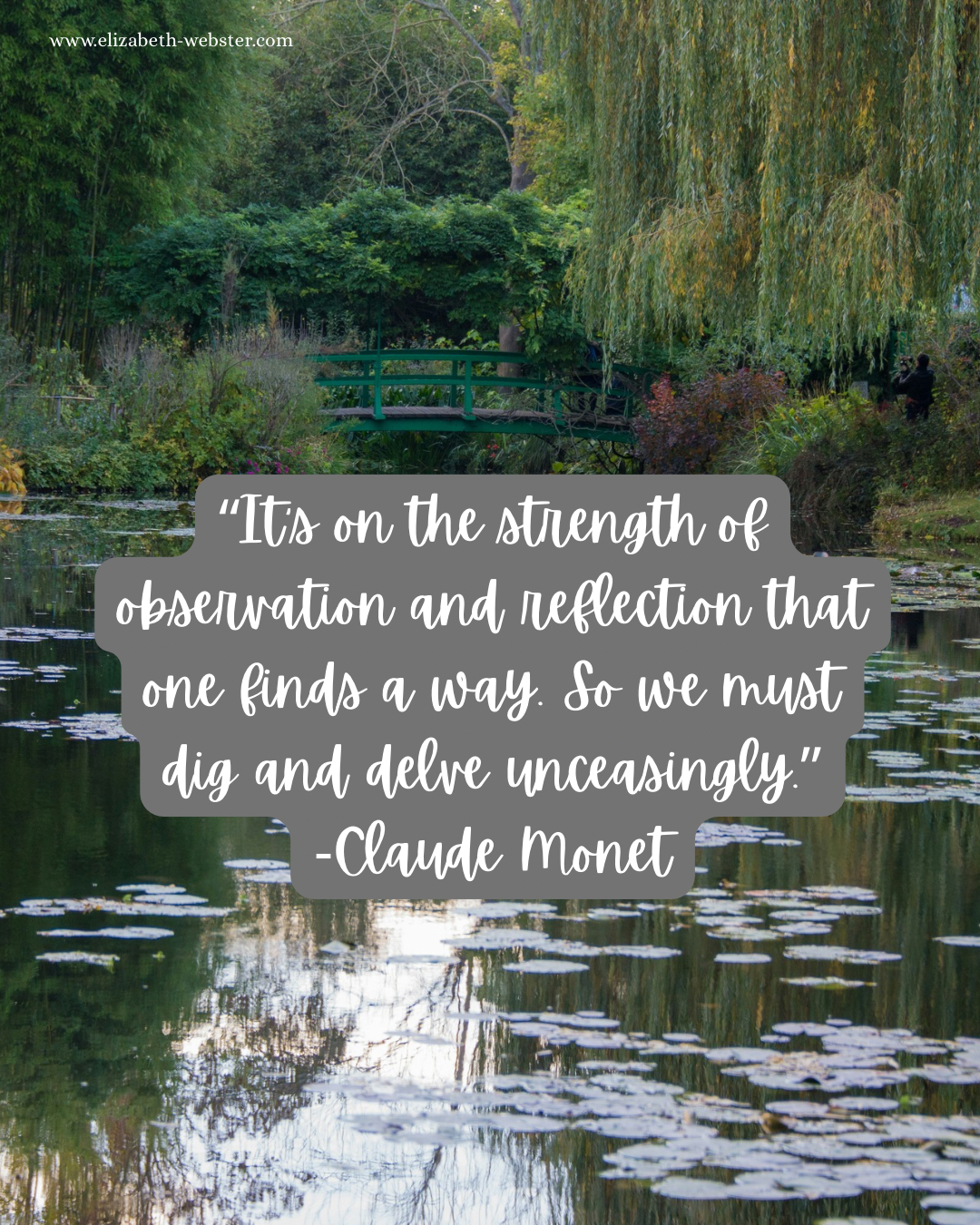
Claude Monet’s Garden in Giverny, France. Image by Richard Hedrick via Unsplash.
In recent months, America has become a place I don’t recognize. The escalating division, dehumanizing language, disappearing people, and even book bans have all been red flags along an increasingly dark trajectory. The political friction reached a crescendo point this month with the deaths of two American citizens. I publicly offered my support for human rights and the rule of law this week – saying out loud fundamental truths which (for me) have always gone without saying.
While I’ve taken solace in the willingness of so many to use their voices, to advocate and to protest, I’ve also wondered how to make sense of this new reality.
Because while we have to stay informed, we also have to play with our kids, to work, to function. After spending time doomscrolling, we need some fresh air. After taking in another heart-wrenching story, we need to claw our way back to joy. Even as our democratic norms are repeatedly challenged, our lives go on. So how do we live our lives with intention when the foundation of our home feels insecure? When our footing feels so unsteady?
I’ve turned to the Impressionist master Claude Monet this week for answers. (As one does).
Monet continued working on his epic masterpiece “Nyphéus [Water Lilies]” as World War I flared around him. He worked on his water lilies from the 1890s until his death in 1926. However, Monet approached them with fresh determination following his son and stepson’s service in the war. The panels feature the water lilies from the pond on Monet’s peaceful property in Giverny. Yet while open air painting his lush, private haven, Monet could hear gunshots.
He admitted the guilt he felt in creating as the world was on fire. On December 1, 1914, Monet wrote: “Yesterday I resumed work. It’s the best way to avoid thinking of these sad times. All the same, I feel ashamed to think about my little researches into form and color while so many people are suffering and dying for us.”
Though his water lilies offer a tranquil escape, they also conjure the uncertain, quicksand quality of trench warfare. His paintings have no horizon line, no space in which viewers can anchor their eyes. Instead, the water lilies are presented abstractly in a murky dreamscape; they are untouched by time and yet defined by unspeakable horrors of a brutal era. Though he was losing his sight, Monet doggedly worked on the paintings until his death. Maybe he recognized even then the significance of the legacy he would leave us.
Ultimately, Monet proposed “Nyphéus [Water Lilies]” as a war memorial in 1918. They’re now displayed at the Musée de l’Orangerie in Paris, with one oval gallery representing sunrise and the other dusk. They are both a recognition of peace and the chaos of its undoing. With his immersive creations, Monet created a pathway out of darkness for us.
In 1924, Monet reflected on the inspiration for his water lilies: “It took me a long time to understand my water lilies … I grew them without thinking of painting them … And then, all of a sudden, I had the revelation of the enchantment of my pond. I took up my palette.”
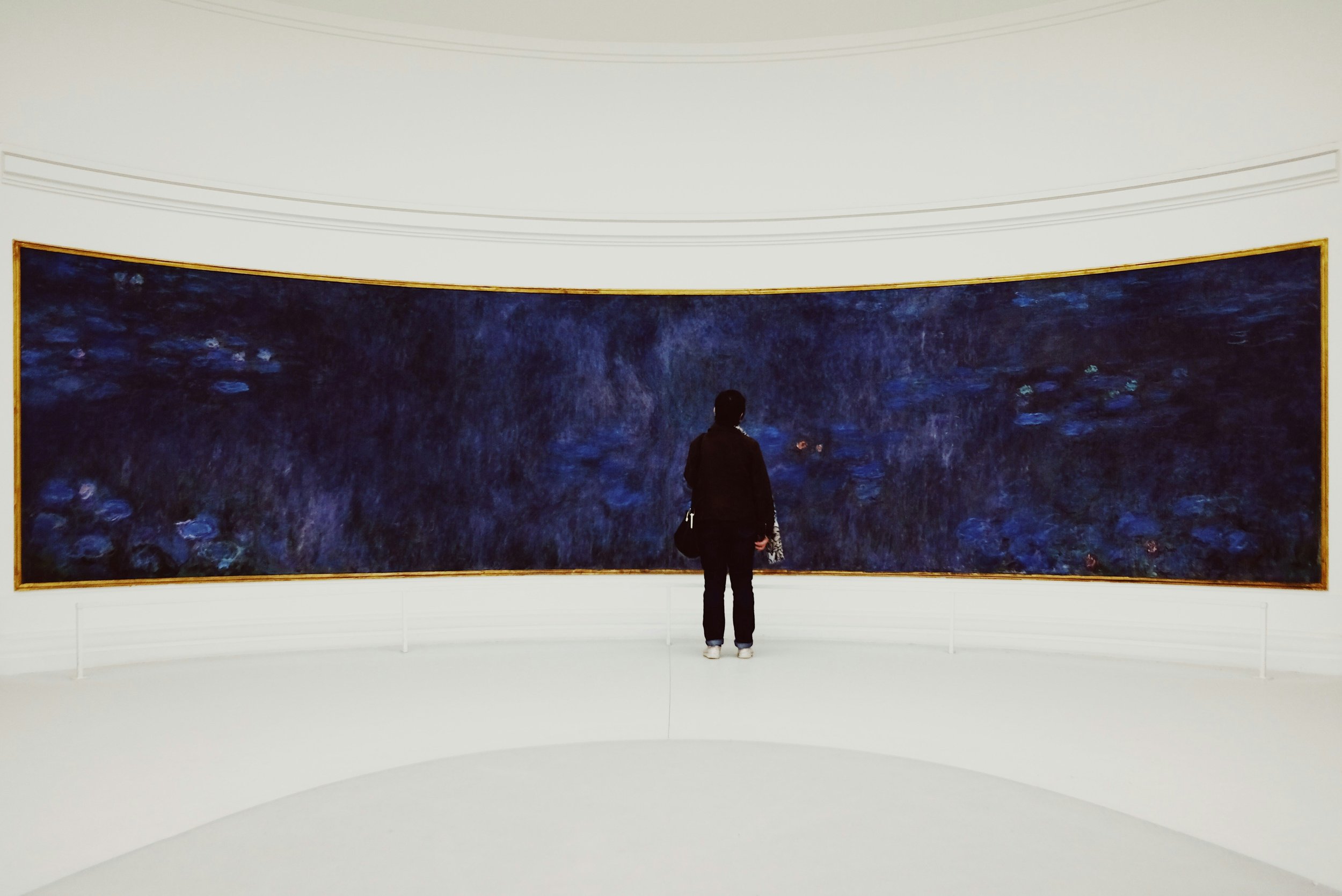
“Nyphéus [Water Lilies]” by Claude Monet at Musée de l’Orangerie in Paris, France. Image via Unsplash by Stijn te Strake.
Why is it so important to create when the world is on fire? To remind us of our own humanity.
Monet’s water lilies suggest that we are not the black void but the promise of sunrise and dusk. In our best moments, we are the sparks of light. We can observe what’s happening around us and reflect on its meaning, while still attempting to rise above the impulse to hate. Monet knew that we are most powerful when we create, rather than destroy.
And his brushstrokes were bold even in their abstraction, even as he was going blind.
Monet reminds us that we always have a choice to make. Despite harrowing external circumstances, we can make something for ourselves and create an offering to others. While resisting, we can make the space we need to let go. Perhaps the peace we seek in the world must always begin within our own hearts.
And on that note, what will you make today?