Thread Lightly: A Mom Friendship Break-up
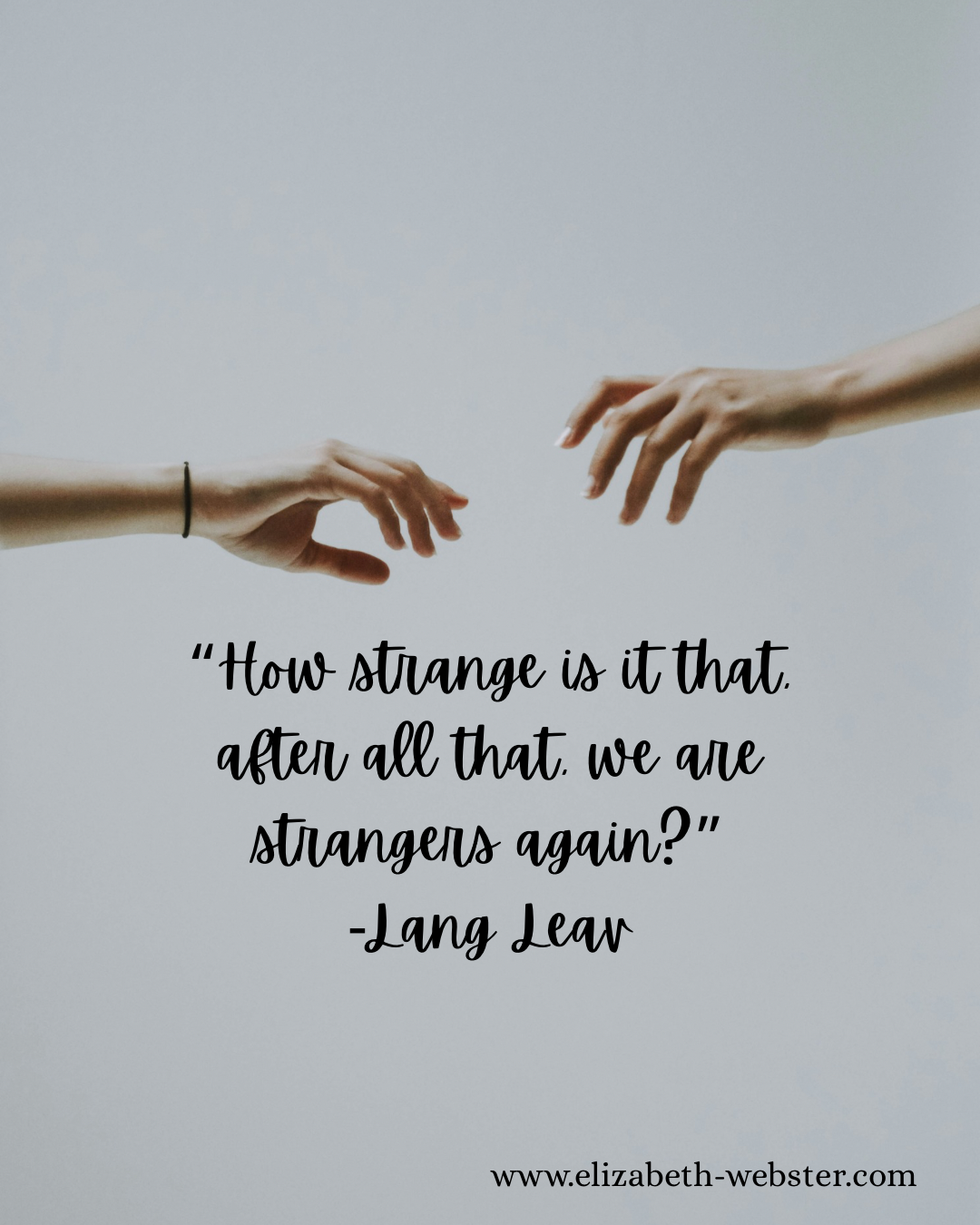
Image by lilartsy via Unsplash.
Recently, the public has digested the fall out from another public break-up. But instead of the typical high-profile celebrity couple parting ways, this break-up was - shockingly enough - of the platonic variety. In a personal essay for The Cut, entitled “Breaking Up With My Toxic Mom Group,” Ashley Tisdale revealed that her mental health had improved after cutting ties with certain mom friends.
After repeatedly feeling left out, Tisdale wrote that she texted the group thread: “This is too high school for me and I don’t want to take part it in anymore.”
Tisdale’s essay quickly went viral. Many moms reported having experienced the same dynamic, while others quickly took to social media in the hopes of uncovering the famous moms in the group. Ironically, Hollywood may soon come calling. With so many members of the public indicating that they know firsthand how it feels to be excluded by parent friends, studio executives are apparently considering the idea creating a film version of Tisdale’s experience.
In my own life, I’ve felt disheartened when parent friendships have fallen apart. Over time, I’ve come to view some of these connections as inherently seasonal. I actually find it amazing now when parent friendships last despite moves, a change of schools, new activities, work challenges, and your run-of-the-mill logistical difficulties. Those text threads that have lasted for years? Those are gold, and I don’t take them for granted.
Still, why does it feel so raw when these parent friendships abruptly end?
Tisdale compared these friendships to something she knew as an adolescent, but I think they can be hard on the psyche in their own right. We hear repeatedly that we all need a village, and the modern parent friendship is an earnest attempt to create that. But parent friendships are vulnerable from the jump. I’ve asked my parent friends for their advice on everything, and I’ve opened up (often while sleep deprived and with messy hair) about challenges that my adolescent self would’ve kept private. I probably told myself I was connecting for my kids - and I was, but I was also going deep for me.
When I think of these friendships, I think of Banksy’s “Girl with Balloon.” To me, the red balloon represents the childlike hope we all have for something lasting. For many parents, that hope encompasses the sort of village our ancestors knew. A village that would wholly support us. And in giving and receiving the confidences necessary to create these connections, I believe we hope in sharing our truths that they’ll be handled carefully, even cradled.
But what about when those private thoughts are belittled? When they become a source of gossip? When they’re used to exclude, rather than to connect?
Worst of all comes the moment when we’re given the silent treatment, and we realize we haven’t been ghosted alone. Because our children are standing, their small hands in ours, in the shadows beside us.
My parent friendships have been among the most rewarding relationships of my life. I cannot imagine shepherding my children forward without my tribe of strong, supportive women around me. They have made me a better parent, a better person. However, not every friendship realized my hope for it, and I’ve felt sharp pain at certain endings.
When I wrote Summer Triangle, intending to celebrate two female friendships for their most nourishing and elevating aspects, I also included the worst play date imaginable. The main character, Eliana, is picked apart for her life choices; by virtue of being invited into Eliana’s home, the other women feel entitled to comment on them. I felt compelled to include this vignette because it felt true. In my experience, an intrinsic aspect of modern mom life is this, too: the adult mean girls who make a sport of passive-aggressive, casual cruelty.
In Summer Triangle, Eliana’s experience enduring such petty, painful slights nudges her to reconnect with her childhood best friend. They end up spending the summer together in the coastal town where they met. While they find new value in their friendship, relying on each other during climactic points in their lives, they make a new friend as well. A woman who shares their outlook and values.
If only the experience of being diminished and excluded in adulthood were fictional.
Clearly, Tisdale’s essay struck a nerve. Because women especially often convey their displeasure indirectly, via passive-aggressive barbs or the silent treatment, Tisdale’s essay is most noteworthy because she said the quiet part out loud. Tisdale declared that these unkind exchanges are no less painful because they’re double entendres. Because they’re digital. Because these emotional, psychological woundings don’t leave marks.
But also? Tisdale’s essay was itself the ultimate passive-aggressive act.
Following the essay’s publication, amateur sleuths scoured images on social media to determine which famous moms were the mean girls she referenced in the essay. Celebrities like Mandy Moore, Hilary Duff, and Meghan Trainor came under unexpected fire for being associated with her. In the essay, Tisdale wrote: “To be clear, I have never considered the moms to be bad people. (Maybe one.)”
By singling out an unnamed woman, Tisdale effectively turned the tables on her alleged toxicity. And the public, always hungry for controversy, felt compelled to learn her name.
Maybe the most challenging aspect of any parent friendship break-up is deciding how to proceed. After the dust settles, is it possible to discuss a private, painful experience without vilifying those who orchestrated it? Without becoming like them? Is it possible to rise above a pattern of behavior and, in so doing, choose a different path?
I don’t know for sure, but I know what I’ll teach my children to do.