What Books Leave Behind
After a good friend finished my novel, Summer Triangle, she paid me a compliment that caught me completely off guard.
She sent me a text describing how my book made her feel. She described the feeling as “warm” and “peaceful” and “calm.” I remember reading her words with misty eyes, entirely overcome and unsure of how to respond. I didn’t know much about how the publishing industry worked then, but - even as a baby author - I anticipated critical responses to my novel. I hadn’t considered the feeling that lingers beyond it.
And what’s more, I knew exactly what she meant. I’m a lifelong reader, too, and I’ve often finished books enveloped in emotion. I’ve turned the last page and remained still for a beat. Maybe on some primal level, I’ve thought I could keep the story close by not (physically) moving away from it. Of course, I know better. Maybe you do, too.
Recently, I’ve been pondering the question my friend ignited: can fiction help us fake a mood so well we begin to believe it?
The answer, according to science, is an emphatic yes.
When we read fiction, our brains process the imagined events much the same way they would drama in reality. According to Psychology Today, our mirror neuron system “responds to the characters’ experiences as if they were our own.” By utilizing our imagination, we’re able to engage in problem-solving, navigating interpersonal relationships, and predicting a resolution. We’re able to step into others’ lives with little risk, buffered from harm by our own reality.
Ironically, because of the intimate narrative perspective fiction offers, we’re often able to understand characters better than the real people we engage with. We know the details of their past, their secrets, and the emotions they work to hide. Fiction allows us to see behind the mask.
And this uniquely prismatic vantage point puts our brains to work. Our brains create “mental models” that integrate every aspect of these characters - literally fleshing them out in the mind’s eye. Because we’re linking characters’ histories to their present realities, we’re linking our brains’ memory systems, emotional centers, and social cognition. This is unusual brain activity. Typically, these regions don’t engage as holistically as they do when we’re reading fiction.
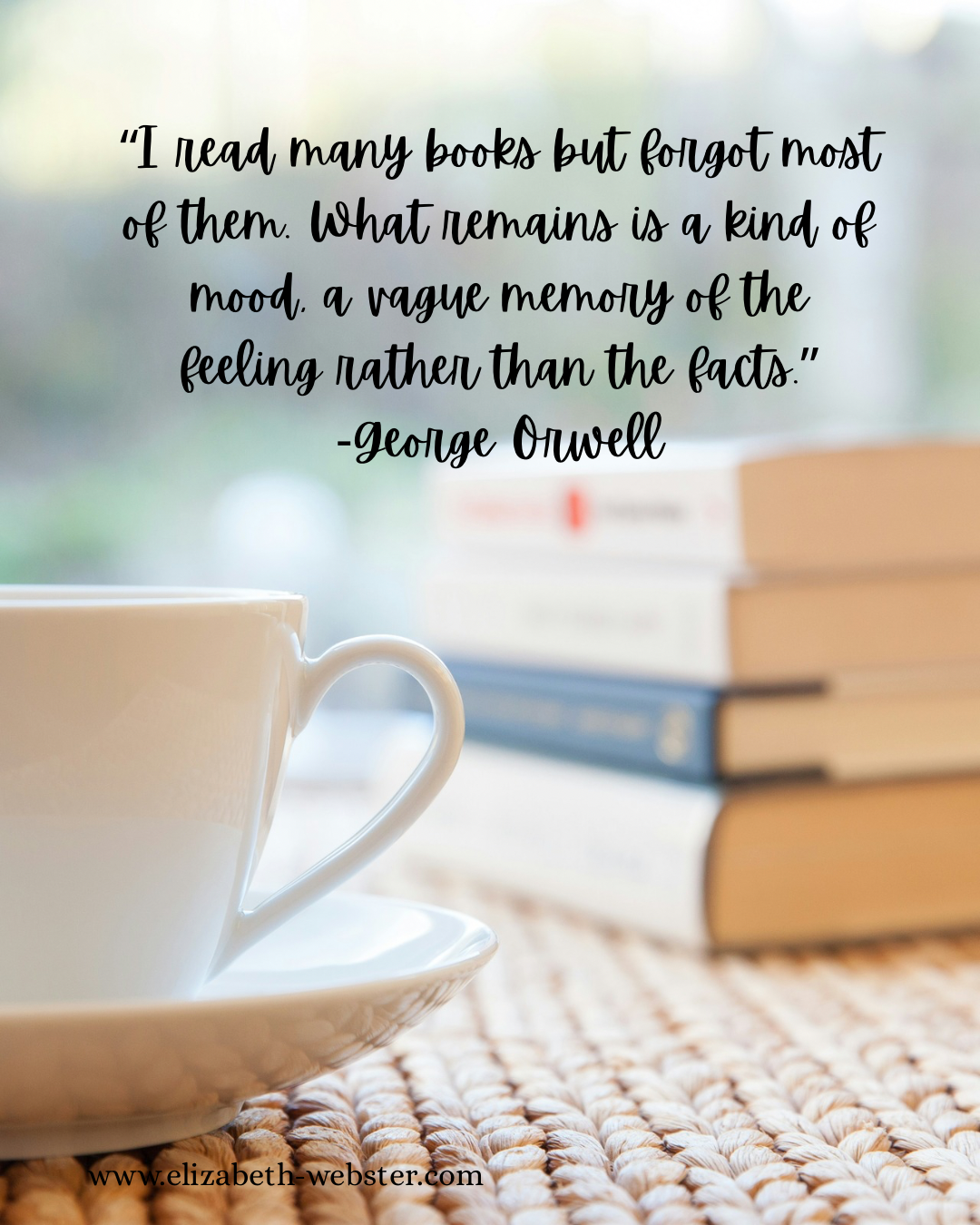
Humans are born storytellers, but we delineate a red line between truth and fiction. Inwardly however, we take ownership of stories that don’t belong to us regardless of their veracity. Our brains believe them to be true. At the end of the story, we feel what the characters feel. And the feeling permeates long after the story’s particulars drift away.
I used to be frustrated when I couldn’t remember details about books I’ve loved. How could I forget names, connections, and even significant plot points when the stories left such an imprint?
Because I’m human. I’m fallible and forgetful, but also, I was along for the ride. Scientific research indicates that fiction is more immersive than previously understood. If we don’t read stories but live them, we’re working the problem in real-time, too.
In my reading life, maybe I’ve been focused less on the details than seeking a resolution with the characters. I confronted conflict with them. I overcame obstacles with them. In the end, I reached the same satisfying emotional catharsis they did. The imprint of that feeling, of that story, is what remains.
Maya Angelou wisely observed that, “I’ve learned that people will forget what you said, people will forget what you did, but people will never forget how you made them feel.”
Lucky for us, people don’t need to be real to imprint our lives. We only need to believe in their story and to take the time to weave it into our own.