An Interview with Author Evie Woods
In the freelance world, editors frequently describe certain articles as “evergreen.” An evergreen piece is the opposite of its trending counterpart. It’s not seasonal. It’s not of-the-moment. It’s strong enough to stand on its own, despite the whims of the news cycle. Words and ideas in an “evergreen” piece have a timeless quality to them. They’re built to last.
But are there evergreen books, too?
Over time, I’ve realized that (for me) an “evergreen” book will always be a book about books, or at least about characters who love books. Author Evie Woods created the ultimate evergreen novel in The Lost Bookshop. In The Lost Bookshop, Opaline, Martha, and Henry all endeavor to discover the origins of a mysterious bookshop and come to better understand themselves while unraveling its story.
The Lost Bookshop is an ambitious undertaking, as the story leaps between timelines and offers incredible, granular details on the antiquarian book trade. Considering the remarkable layers of ingenuity in Evie’s work, I thought it would be interesting to speak with her about her creative process. I’m grateful to Evie for taking the time to share her thoughts via an email interview.
Please see our interview below.
Elizabeth Webster: How would you describe your writing routine?
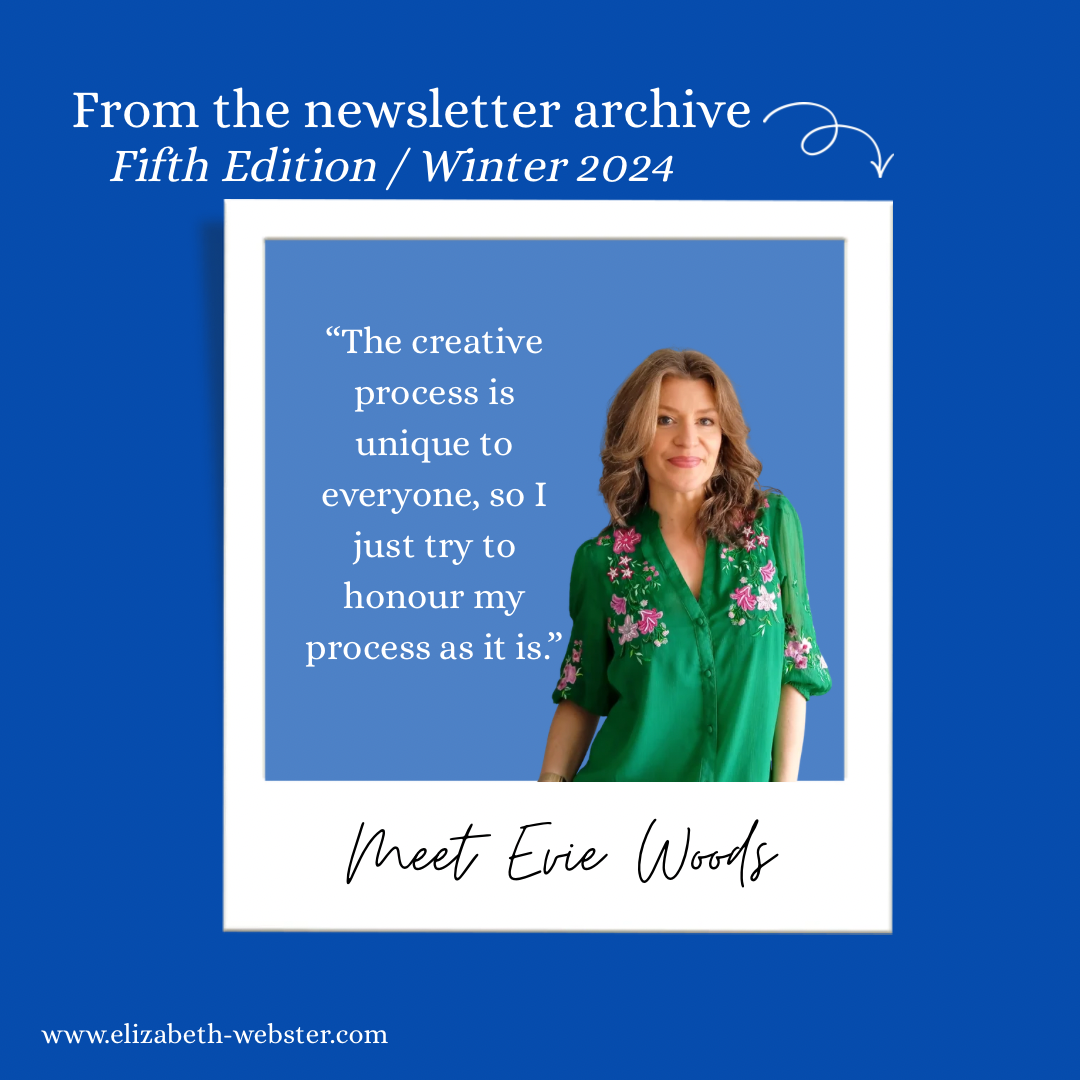
Evie Woods: Unpredictable! I can spend weeks or months writing/researching for long hours, then I can have periods where the daily word counts are small. Sometimes, I don’t write at all. The creative process is unique to everyone, so I just try to honour my process as it is.
Webster: The Lost Bookshop is a sensory feast for book lovers, with references to famous authors and intriguing insight into the antiquarian book trade. How much research was involved for you to tell this story? Do you find that research further inspires creativity?
Woods: There was A LOT of research for this book. I basically had to learn what the life of an antique bookseller entailed, or at least enough to make readers believe this story. I thoroughly enjoyed this research though, because it’s a subject matter I’m so passionate about - BOOKS! I think that’s why it’s really important to write about something you love, because you will spend a lot of time in that world. For me, it was almost two years.
Webster: What is the inspiration behind your novel, The Mysterious Bakery on Rue de Paris?
Woods: I owe the genesis of this story to the Irish food writer, Trish Deseine. Years ago, she had a TV series set in France and in one episode, she took the viewer around the lesser- known areas of culinary Paris. There was a very ordinary looking bakery, but the one outstanding feature was that no one was ever seen going in or going out! And so the mystery began. But ultimately the theme is one I revisit in many of my stories - finding one’s true path in life.
Webster: Do you have any advice for creatives who feel intimidated by the thought of making their work and sharing it with the world?
Woods: I don’t know if I have advice, but I do have empathy! There’s a great quote by Donald Woods Winnicott, “Artists are people driven by the tension between the desire to communicate and the desire to hide.” Like the routine question, I think it’s up to each individual to tread this tightrope in a way that suits them. For me, I decided to take the risk because the desire to reach people was greater, but I still have to find a balance so I don’t get overwhelmed.
Many thanks to Evie Woods for contributing her time and insight! Since our interview, Evie released another beautiful book, The Violin Maker’s Secret. In a recent essay for People Magazine, Evie shared the Irish folklore that inspired it.
For the most recent interviews, recipes, event news, and even more bookish content, make sure to subscribe to my quarterly newsletter below!